
Elemental Iron Calculator (Ferrous Sulfate, Gluconate, Fumarate) – Daily Iron Dose Calculator
Elemental Iron Calculator
Calculation Results
| Calculation | Value |
|---|---|
| Elemental Iron per Unit (mg) | - |
| Elemental Iron per Dose (mg) | - |
| Total Daily Elemental Iron (mg/day) | - |
Our Popular Calculators
- Adults ADHD Symptoms Test
- Amoxicillin Dose Calculator
- Bi-Est Compounding Calculator
- Tri-Est Compounding Calculator
- BMI Calculator
- Clarks Rule Calculator
- Elemental Iron Calculator
- Ear Drops Day Supply
- Eye Drops Day Supply
- Ibuprofen Dose Calculator
- Insulin Calculator
- Tablet Daily Supply
- Tri-Est Compounding Calculator
- Infant Tylenol Dosage Calculator
What is Elemental Iron?
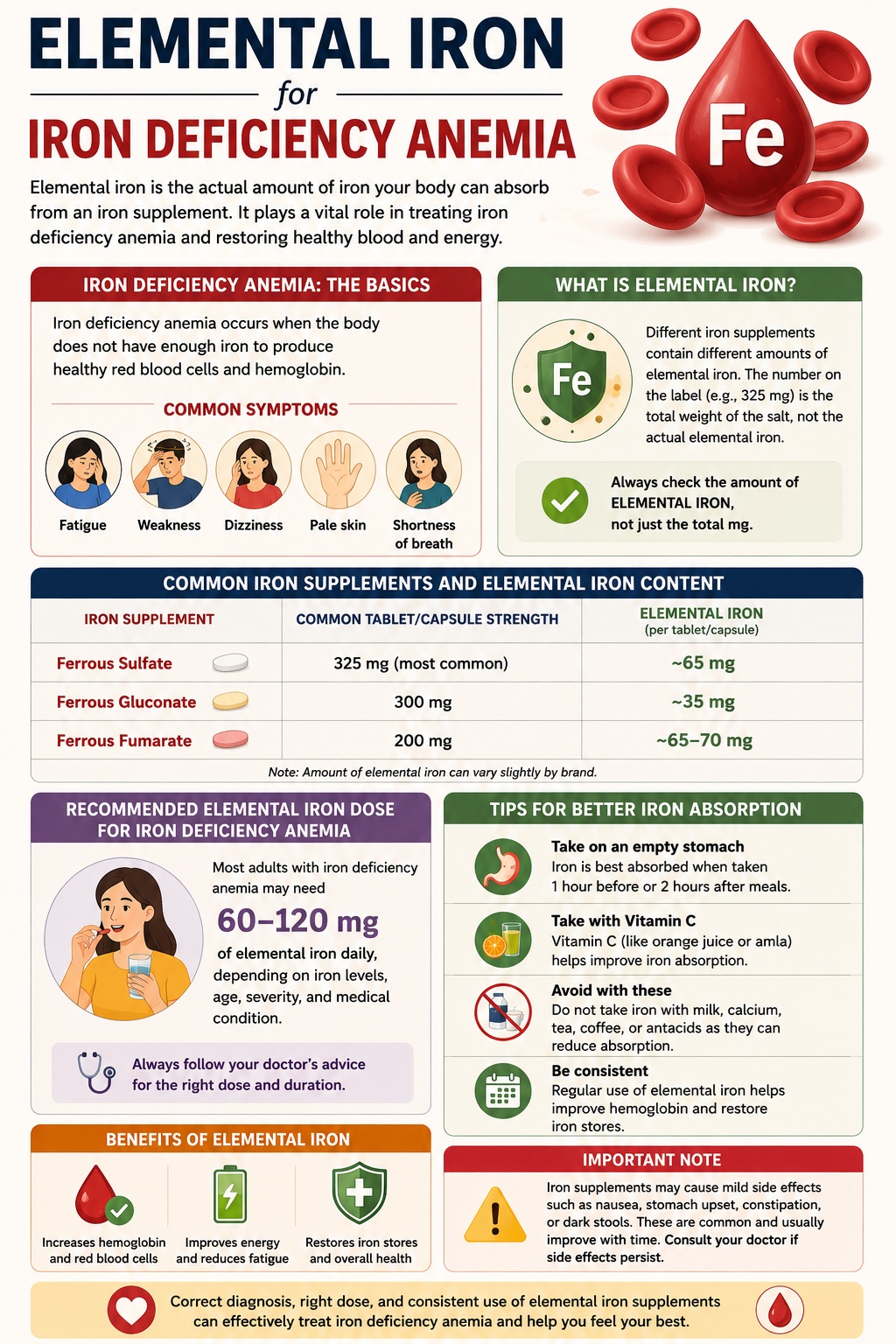
Elemental iron is the actual amount of pure iron your body can absorb from an iron supplement. Many iron pills are made from iron salts like ferrous sulfate or ferrous gluconate, but those salts contain other parts besides just iron.
What is the difference between iron salt and elemental iron?
When you take an iron supplement, it usually comes as an iron salt, like ferrous sulfate or ferrous gluconate. This salt is just the whole chemical form that carries the iron. But your body only uses the iron part inside that salt, which is called elemental iron. So, when you read the label, the big number is the salt amount, but the smaller number shows how much real iron your body actually gets.
Why elemental iron is what really matters for dosing?
When you take an iron supplement, what your body actually needs is the elemental iron inside it, and not the whole salt or pill weight. Different iron pills have different amounts of true iron in them. So, a 325 mg ferrous sulfate tablet doesn’t mean you’re getting 325 mg of iron. You are actually only getting about 65 mg of usable iron. That’s why we always check the elemental iron for proper dosing.
How do I calculate Elemental Iron
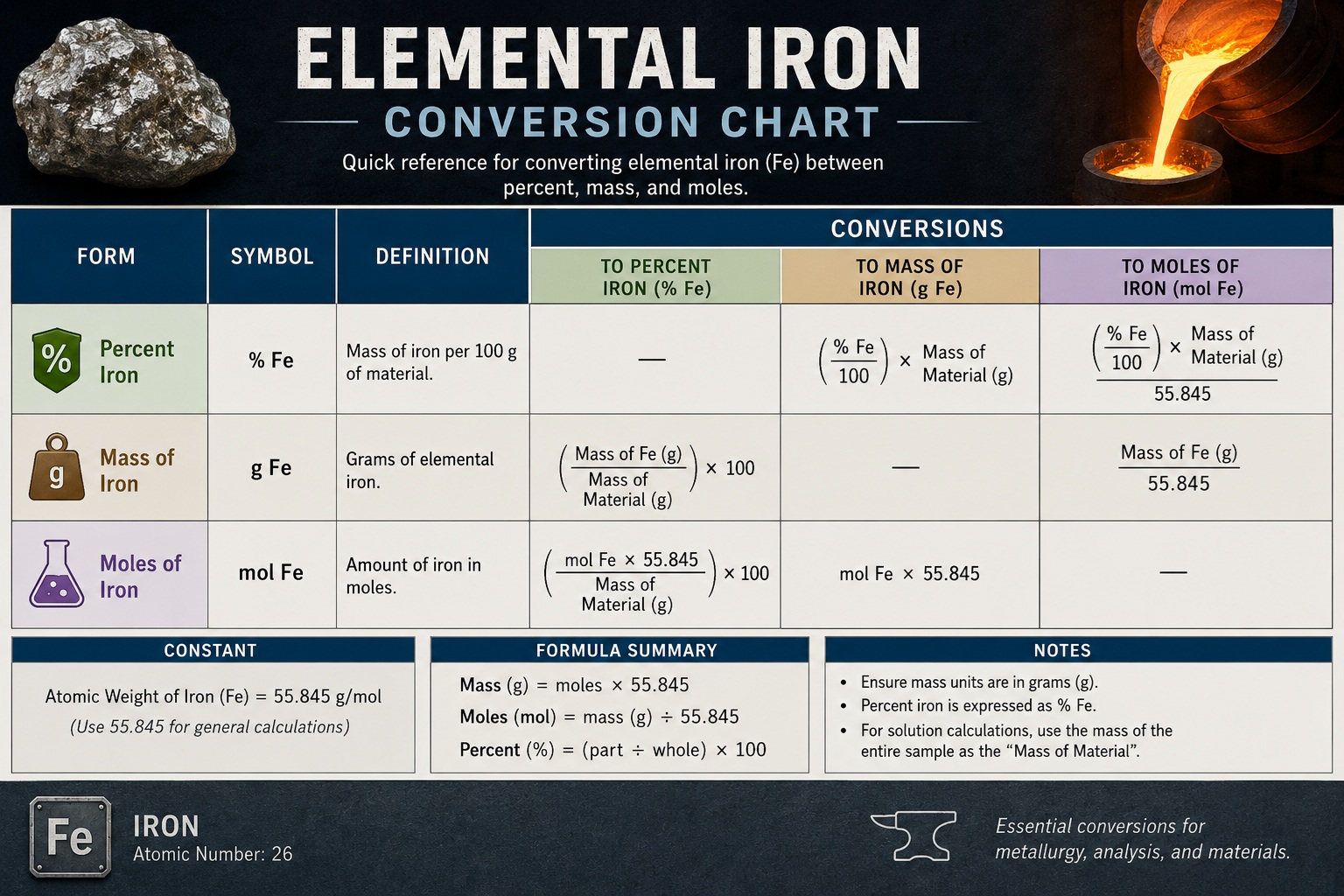
Figuring out elemental iron is pretty straightforward once you get the hang of it. Basically, you’re looking for the actual amount of pure iron in a supplement or medication, not the total weight of the compound. Most iron pills use salts like ferrous sulfate, fumarate, or gluconate, and each has a different percentage of elemental iron.
Here’s the simple way: check the label for the compound weight (say, 325 mg ferrous sulfate) and multiply it by the percentage of elemental iron for that type. For ferrous sulfate, that’s about 20%, so 325 mg x 0.20 = 65 mg elemental iron. Ferrous fumarate is roughly 33%, and ferrous gluconate around 12%. If a label already says “elemental iron,” you’re done. Otherwise, do the math. Keep in mind, doctors prescribe based on elemental iron to avoid under- or overdosing. So always double-check—your stomach (and your treatment plan) will thank you.
Different Types of Iron Supplements
Iron supplements come in different forms, and each one has a different amount of actual iron your body uses, which is called elemental iron. The most common is ferrous sulfate, which is the type most people get from the pharmacy.
Elemental Iron Content Comparison Table (Ferrous Sulfate, Gluconate, Fumarate)
| Iron Supplement Name | Tablet / Capsule Strength | % Elemental Iron | Elemental Iron Content | Common Uses | Notes |
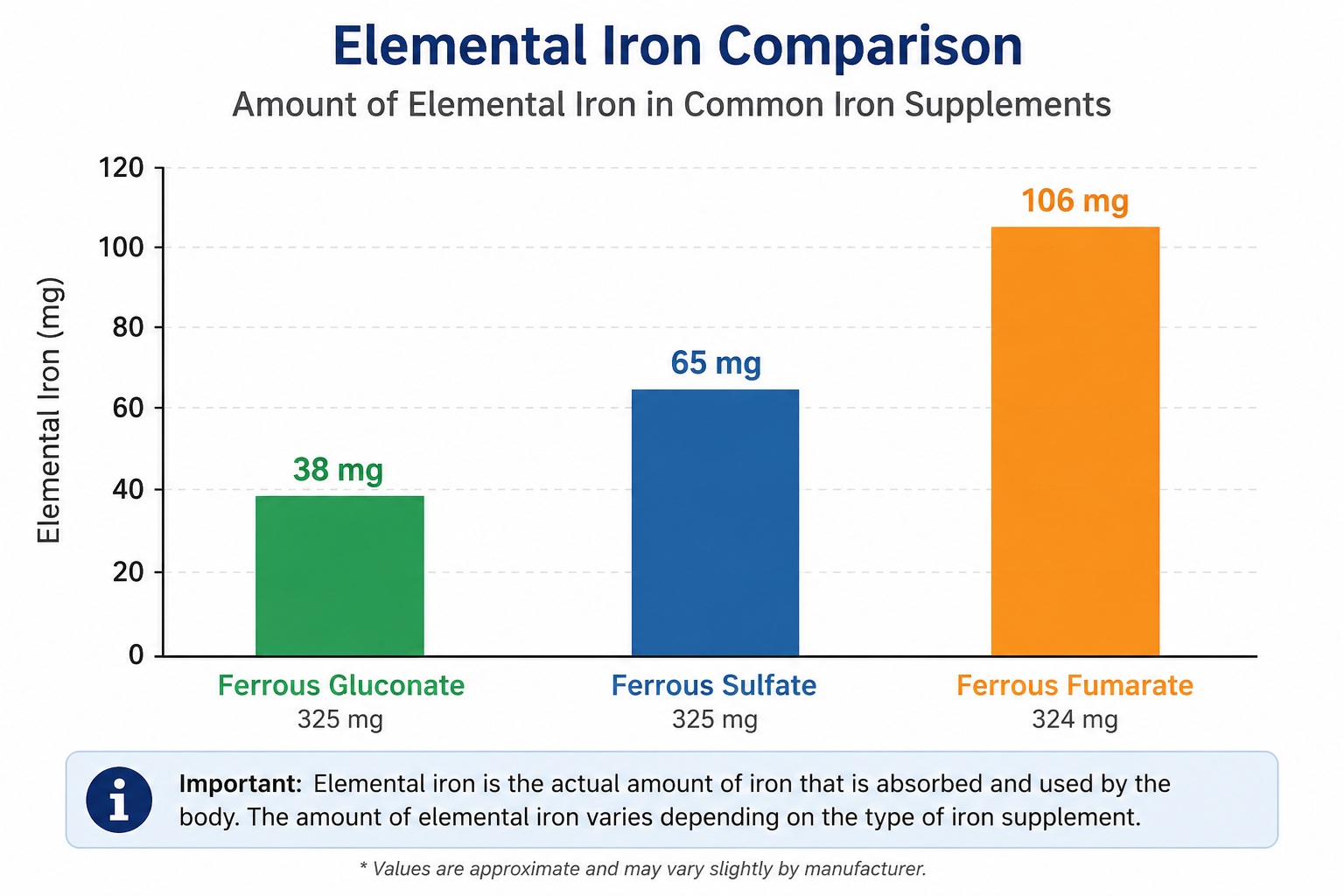
| Ferrous Sulfate | 325 mg tablet | ~20% | 65 mg elemental iron | Iron deficiency anemia | Most commonly prescribed iron supplement |
| Ferrous Sulfate | 220 mg/5 mL liquid | ~20% | 44 mg elemental iron per 5 mL | Pediatric and adult iron deficiency | Liquid formulation useful for swallowing difficulty |
| Ferrous Gluconate | 324 mg tablet | ~12% | 38 mg elemental iron | Mild iron deficiency | Often causes less stomach upset |
| Ferrous Fumarate | 325 mg tablet | ~33% | 106 mg elemental iron | Moderate to severe iron deficiency | Highest elemental iron among common oral salts |
| Carbonyl Iron | 45 mg tablet | 100% elemental iron | 45 mg elemental iron | Iron deficiency prevention | Slower absorption may reduce GI side effects |
| Polysaccharide-Iron Complex | 150 mg capsule | Variable | 150 mg elemental iron | Iron deficiency anemia | Often better tolerated |
| Ferrous Bisglycinate | 25 mg capsule | High bioavailability | 25 mg elemental iron | Gentle iron supplementation | May cause fewer GI adverse effects |
Ferrous Sulfate vs Ferrous Gluconate vs Ferrous Fumarate
Elemental Iron Content: The Real Difference
The main thing separating these is how much elemental iron you actually get.
Ferrous Sulfate
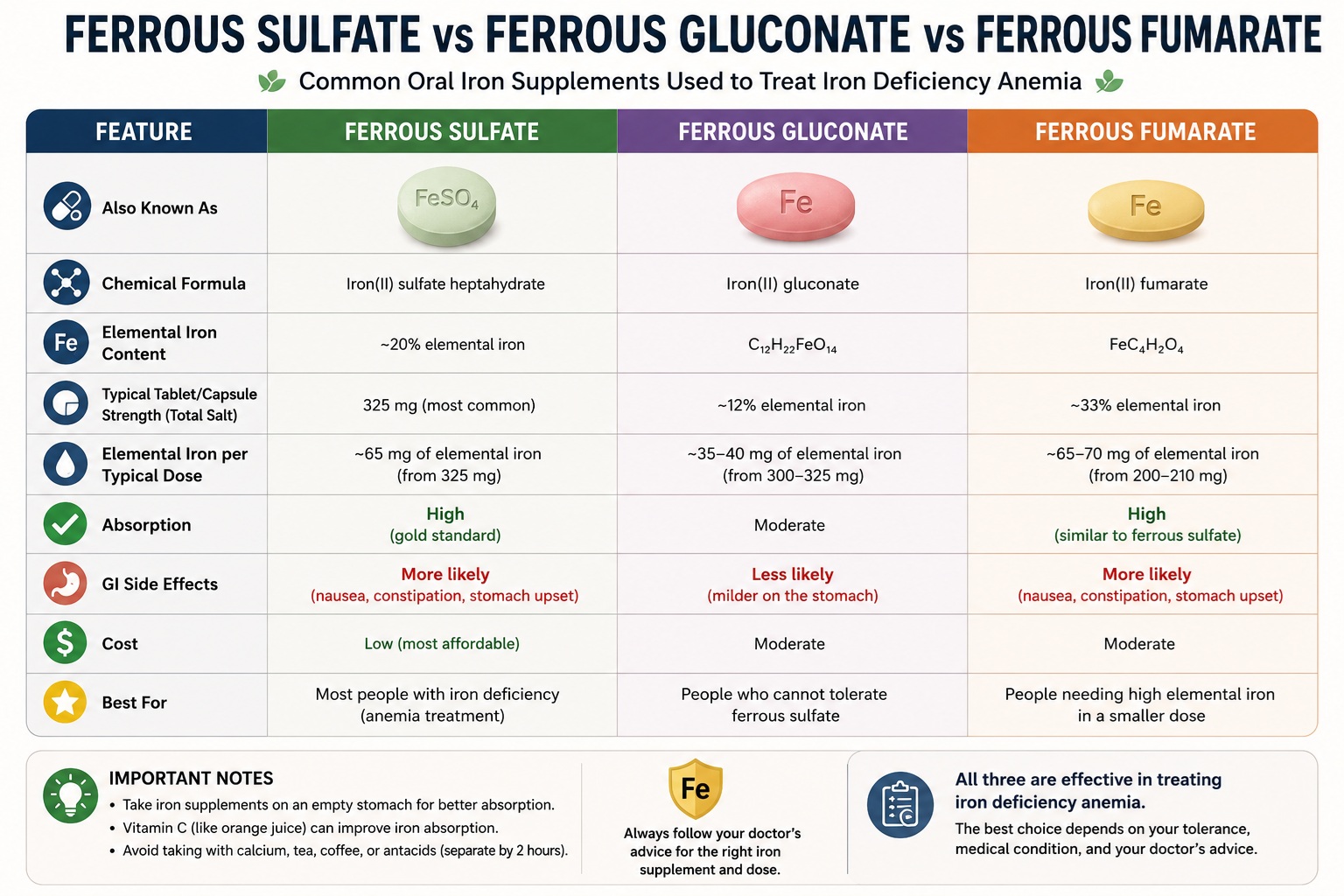
Ferrous sulfate, the most common one, has around 20%. It contains about 65 mg elemental iron in a 325 mg tablet. Doctors often recommend it because it is affordable and widely available. However, some people experience side effects like constipation, nausea, stomach pain, or dark stools.
Ferrous Gluconate
Ferrous gluconate contains less elemental iron at just 12%, so a 300 mg pill only delivers about 36 mg of elemental iron. It is generally considered gentler on the stomach and may be a better option for people who cannot tolerate ferrous sulfate. Because the iron content is lower, higher or more frequent doses may be needed.
Ferrous Fumarate
Ferrous fumarate packs the biggest punch, about 33% elemental iron. That means a standard 200 mg tablet gives you roughly 66 mg of pure iron. It is often used when patients need stronger iron replacement. While effective, it may also cause gastrointestinal side effects in sensitive individuals.
Side Effects & Tolerability
Here’s where personal choice matters. Ferrous sulfate is cheap and effective but notorious for constipation and stomach upset. People search for “ferrous sulfate alternative” all the time for this reason. Ferrous gluconate is often gentler on the gut, which is why doctors sometimes suggest it if you have a sensitive stomach. Ferrous fumarate falls in the middle to strong but is usually better tolerated than sulfate.
Which One Should You Pick?
If your iron deficiency is severe, fumarate or sulfate gets levels up faster due to higher elemental iron per pill. But if you’re dealing with nausea or constipation, gluconate might be worth the trade-off (you’ll just need more pills or a higher dose). Always check the label for “elemental iron” and talk to your doctor regarding absorbability; it also depends on vitamin C intake and when you take it. No single “best” exists; it’s whatever works for your body without wrecking your digestion.
Recommended Daily Elemental Iron Dose
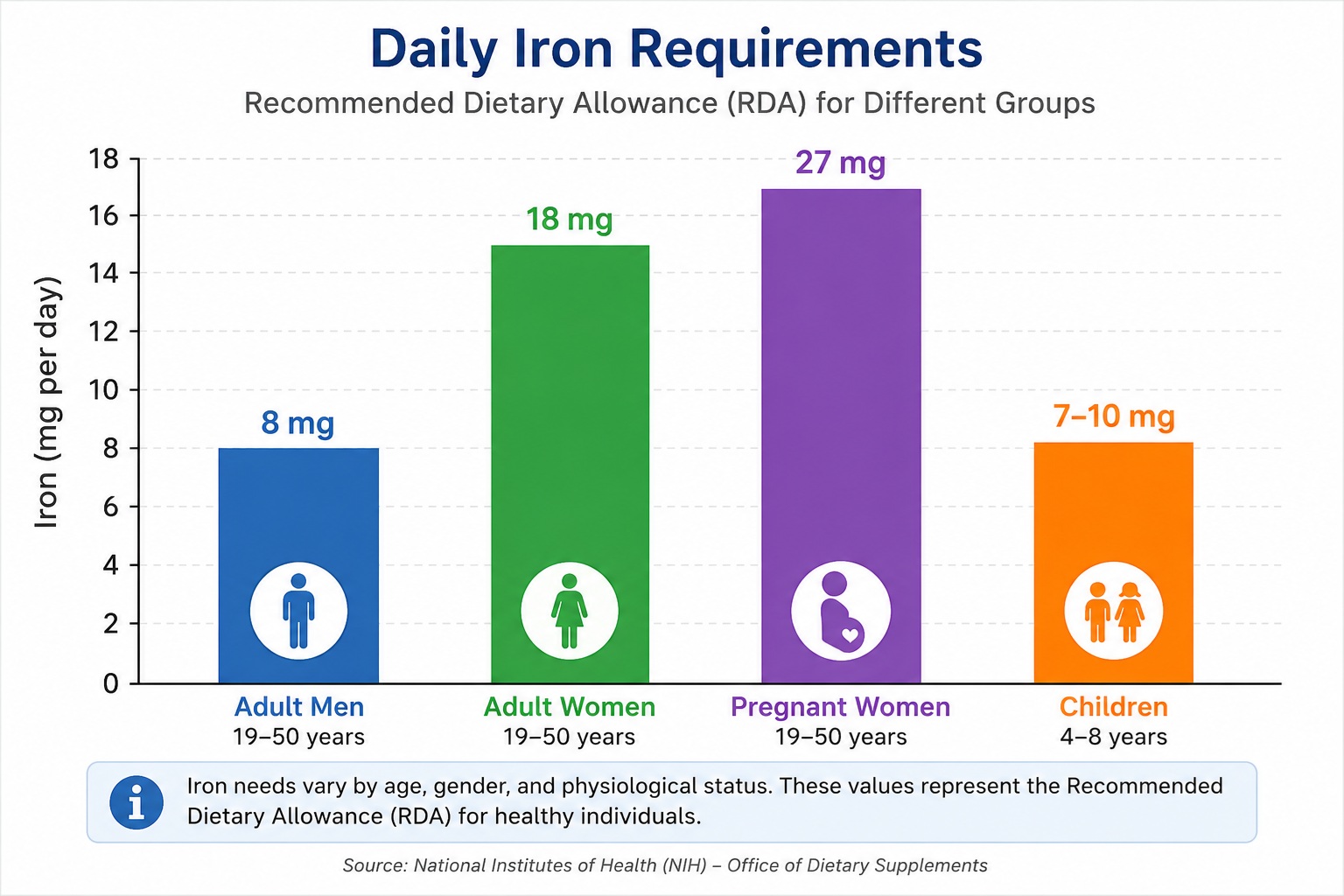
The recommended daily elemental iron dose depends on age, gender, pregnancy status, and iron deficiency severity. For most adults with iron deficiency anemia, doctors commonly recommend 60–120 mg of elemental iron per day divided into 1–3 doses. Pregnant women often need higher iron intake to support healthy blood production and fetal growth.
Common Daily Iron Requirements
- Adult men: around 8 mg daily
- Adult women (19–50 years): around 18 mg daily
- Pregnant women: about 27 mg daily
- Children and teenagers: varies by age and growth needs
Best Time to Take Iron Supplements
Iron supplements are usually absorbed better on an empty stomach with vitamin C, such as orange juice. Avoid taking iron with milk, calcium, or antacids because they may reduce absorption.

Elemental Iron for Iron Deficiency Anemia
Why Elemental Iron Matters in Anemia
When you have iron deficiency anemia, your body’s iron stores are wiped out. Doctors don’t prescribe the total weight of the pill, they prescribe elemental iron because that’s the pure amount your blood can actually use. Ignoring this is why some people take iron for months with no improvement.
How Much Elemental Iron for Anemia?
Standard treatment guidelines recommend 100–200 mg of elemental iron per day, usually split into 2–3 doses. For example, a 325 mg ferrous sulfate tablet gives you only 65 mg elemental, so you might need three pills daily to hit 195 mg.
Best Absorbed Iron & Timing
To raise ferritin levels faster, take elemental iron on an empty stomach with vitamin C (like a small glass of orange juice). Avoid coffee, tea, or calcium within two hours BECAUSE they slash absorption by up to 80%. If stomach upset happens, switching from sulfate to gluconate or fumarate helps without lowering the elemental dose too much.
How Long Until You Feel Better?
Most people see fatigue improve in 2–4 weeks, but rebuilding iron stores takes 3–6 months. Stopping early is the #1 mistake. Get your ferritin rechecked and only stop when your doctor says so.
Tips for Better Iron Absorption
Iron supplements work best when taken on an empty stomach with vitamin C. Avoid taking iron with milk, calcium, tea, or antacids because they can reduce absorption. Consistent use of elemental iron supplements can help improve hemoglobin levels and restore healthy iron stores over time.
Which Iron Supplement Is Best for Iron Deficiency?
Ferrous sulfate is commonly recommended as the first-line treatment for iron deficiency anemia because it is effective, affordable, and widely available.
Elemental Iron vs Ferrous Sulfate: What’s the Difference?
Elemental iron refers to the actual amount of usable iron absorbed by the body, while ferrous sulfate, ferrous gluconate, and ferrous fumarate are iron salt compounds used in supplements.
Frequently Asked Questions (FAQs)
How much elemental iron is in 325 mg ferrous sulfate?
A 325 mg tablet of ferrous sulfate typically contains about 65 mg of elemental iron. The exact amount may vary slightly depending on the manufacturer and formulation.
How much elemental iron should adults take daily?
Most adults with iron deficiency anemia are commonly prescribed 60 to 120 mg of elemental iron daily, depending on their medical condition and healthcare provider recommendations.
Which iron supplement has the most elemental iron?
Ferrous fumarate generally contains the highest percentage of elemental iron compared to ferrous sulfate and ferrous gluconate.
Is ferrous gluconate gentler on the stomach?
Yes, ferrous gluconate is often considered gentler on the stomach and may cause fewer gastrointestinal side effects such as nausea and constipation.
How do I calculate elemental iron dosage?
To calculate elemental iron dosage, multiply the tablet strength by the percentage of elemental iron in that formulation. Many online calculators can simplify this process.
What is the best time to take iron supplements?
Iron supplements are usually best absorbed on an empty stomach, preferably in the morning or between meals, unless stomach irritation occurs.
Can I take iron supplements with vitamin C?
Yes, vitamin C may improve iron absorption and is commonly recommended when taking oral iron supplements.
What foods should I avoid while taking iron supplements?
Calcium-rich foods, dairy products, tea, coffee, and antacids may reduce iron absorption and should generally be avoided close to dosing time.
How long does it take iron supplements to work?
Many people begin noticing improvement in symptoms within a few weeks, but iron supplementation may continue for several months to restore iron stores.
What are common side effects of iron supplements?
Common side effects include constipation, nausea, stomach upset, dark stools, and abdominal discomfort.
Can too much iron be harmful?
Yes, excessive iron intake may lead to iron toxicity and serious health complications. Iron supplements should only be taken as directed by a healthcare professional.
Medical References
-
National Institutes of Health (NIH) Office of Dietary Supplements.
Iron Fact Sheet for Health Professionals.
Available at: https://ods.od.nih.gov/factsheets/Iron-HealthProfessional/ -
Centers for Disease Control and Prevention (CDC).
Iron and Iron Deficiency.
Available at: https://www.cdc.gov/nutrition/micronutrient-malnutrition/micronutrients/iron.html -
Harvard T.H. Chan School of Public Health.
Iron – The Nutrition Source.
Available at: https://nutritionsource.hsph.harvard.edu/iron/ -
University of Rochester Medical Center.
Iron Supplements and Iron Deficiency Anemia.
Available at: https://www.urmc.rochester.edu/encyclopedia/content.aspx?ContentTypeID=85&ContentID=P00098 -
Nemours KidsHealth.
Iron Deficiency Anemia.
Available at: https://kidshealth.org/en/parents/ida.html
Medically Reviewed By: Adesh Pundir, RPh
Licensed Pharmacist – Texas State Board of Pharmacy
This content has been medically reviewed for accuracy, clinical relevance, and patient safety by a licensed pharmacist experienced in medication therapy management, pharmacy calculations, and patient counseling.
Last Reviewed: